

In 2017, as Hurricane Harvey steamrolled through Houston, Texas, thousands of people opened up their emails in 2017 to a shocking email.

Airbnb had planned this marketing campaign far in advance, but their timing was atrocious. Intending to highlight water-themed homes, such as houseboats and waterfall slides, it ended up looking like a mockery of all of those who had lost their homes—and even their lives—in the hurricane-buffeted city of Houston.
When you’ve been working on a marketing campaign for months, it can be difficult to view it through the lens of a current event that just happened. But if you don’t, the rest of the world will.
Do Your Research!
Sometimes, this type of marketing blunder comes about because of a lack of research on the part of the marketing team. For example, Digiorno Pizza posted a tweet using the trending hashtag #WhyIStayed. The tweet read:
“#WhyIStayed You had pizza.”
Out of context, there seems to be nothing wrong with the tweet. The issue was that the hashtag #WhyIStayed was being used by victims of domestic violence. It was intended to raise awareness about why people might stay in an abusive relationship, despite the dangers, and to share hope for those who were currently suffering from domestic abuse.
Obviously, researching why this hashtag was trending (in this case, because of Ray Rice’s physical attack on his fiancé) would have helped Digiorno avoid this PR train wreck.
Looking to the Past
Even if an ad doesn’t seem to link to any actual current events, it makes sense to think about how people might mentally relate it to past historical events as well.
Just a few years after the Boston Marathon bombing, Adidas was sponsoring the 2017 marathon. Those who finished the race successfully received an email from Adidas congratulating them on “surviving” the grueling race.
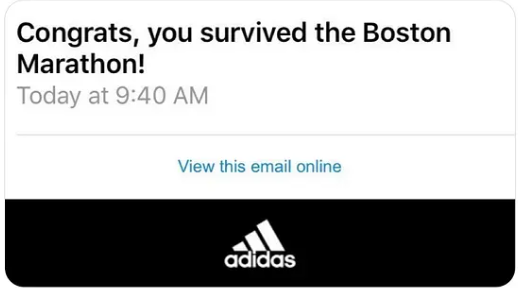
While they obviously meant that the runners had pushed themselves hard physically, the connotation was disturbing in light of the bombing four years beforehand.
Similarly, a year after the 9/11 attacks, Starbucks released an ad promoting their new Tazo Citrus drinks. Take a look at it:

Did no one in the marketing department realize that the image of the dragonfly aimed at the pair of drinks looked disturbingly familiar? Combined with the surprisingly building-like blades of grass and the phrase “Collapse into cool,” this ad struck all the wrong notes with a public that was still reeling from the national disaster.
While all of these mistakes were unintentional, they were also avoidable. Before launching a marketing campaign, printing an ad, or even just posting on social media, ask a couple of other people to eyeball your content. Make sure that you’re not taking advantage of other people’s suffering or making a mockery of a serious event. As always, view it through your customer’s eyes rather than through your own.
This article is part of the Marketing Blunders series. These articles discuss common marketing fiascos and how to avoid them. See all the articles in the series here.


