

I approached my car and saw the ticket on the windshield. Oh no.
When I looked closer, though, I saw that it wasn’t a ticket. It was from the Maryland State Police, but it was a little pamphlet.
Wait, a pamphlet?
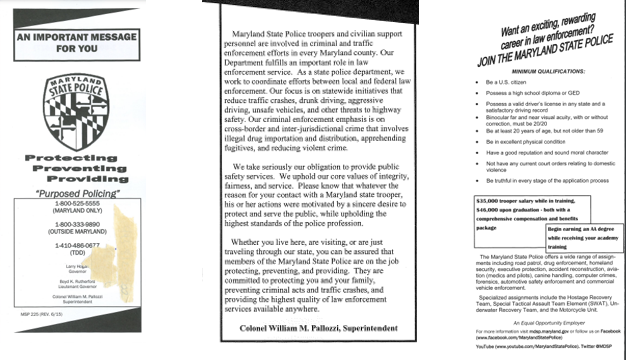
The pamphlet described the “public safety services” that the Maryland State Police provides. It then proceeded to encourage me to join their ranks. Me!
Just a bit of background here: The police department—especially here in Baltimore, where I live—has been under assault for several years. It has been criticized for internal issues, shooting unarmed people, and of course the infamous Freddie Grey case.
After months of self-flagellation, the police department had obviously realized that they needed to be proactive.
And proactive means marketing.
The Maryland State Police were marketing on two fronts: trying to convince citizens that they provide an essential service, and trying to gain new employees. They were “committed to protecting you and your family” and “providing the highest quality of law enforcement services available anywhere.” The police were also an “exciting, rewarding, career” option, going so far as to include salary and benefit information on the brochure.
That even had me thinking… I haven’t dreamed of becoming a police officer since I was five years old. Maybe I should reconsider?
The Science of Marketing Moments
As a business owner, you can proactively market to your clients, even when the timing seems to be imperfect.
Remember that love and hate are a lot closer than love and apathy. When a customer is oblivious to your product or service, then it’s hard to convert them into loyal customers. But if they’re angry or upset, that means you have a golden marketing opportunity on your hands.
Imagine that you have just checked into a hotel that you neither love nor hate. You’re just staying there because it was convenient. Or you found a deal on Kayak. Or it’s down the street from the convention you’re attending.
Suddenly, you see a cockroach in your room. You’re furious! Livid! Angrier than ever! You march down to the front desk, ready to give them a piece of your mind.
That’s the moment where the hotel’s response can either create a PR disaster or gain a loyal customer. If the staff at the front desk gives you the runaround, if they ignore your fury, or if they give you only canned replies, then you’re finished with them. If you’re angry enough, you might even spew your venom on customer review sites or on social media, causing untold damage to the hotel.
But what if the hotel seizes the opportunity, going overboard to make you happy? What if they move you to a new room instantly, to the best room available, plus comp you a free breakfast, plus gift you with a voucher to return for a complimentary night at their hotel? Not only will this virtually ensure that you will be back, for a stay that may likely stretch for more than one night…but they will have changed an apathetic, and then enraged, customer into a raving fan.
It’s not easy to do. But when you face a challenging customer situation, view it as an opportunity to turn marketing lemons into sweet, refreshing lemonade.
Oops, Our Mistake!
What kind of sour, lemon-like situations are we talking about? Perhaps the most obvious is when your company has messed up in some way, and a customer is upset. They might come storming into your store demanding a refund, they might call you up and try to give you a piece of their mind, or they might post a vicious rant on social media intended to destroy your company’s reputation. Apple and JetBlue are two companies that pride themselves on responding calmly to social media complaints, and they have garnered an excellent reputation for customer service because of it. But you can take it a step farther than that.
For example, one customer went on a social media vent against Clarks Shoes after he received two left shoes instead of a pair. When his post went viral, Clarks could have easily issued a refund and requested that the shoes be sent back. Instead, they looked into the situation, and even into the customer in question.
The customer had actually bought the shoes for his nine-year-old son, who was a huge fan of the movie series Transformers. Clarks decided to issue the refund along with a letter of apology written in the style of Optimus Prime, a character in the series. The company also included a drawing of a Transformer character. Suddenly, the viral vent became an excellent marketing opportunity for Clarks, a chance for their reputation for amazing customer service to shine.
Good Point!
Then there are times when your detractors are actually worth listening to.
For example, after the 2004 documentary Super Size Me came out, people started looking at McDonald’s as an awful choice for anyone who cared even a tiny bit about their health.
McDonald’s seized the opportunity and responded by adding more healthful options to their menu, including salads, oatmeal, and yogurts with fruit. They even swapped out fries for apple slices in the kid-sized Happy Meals. Great move!
Time Magazine took this one step further. When their August 2015 issue sported an awkward-looking cover about virtual reality, the Twitterverse went wild. Users created dozens of memes making fun of the awkward pose of the man on the cover.
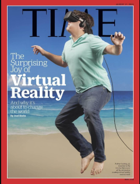
Time’s response? They published an article about the incident, complete with a list of their favorite memes about it. Instead of getting defensive, or taking themselves too seriously, they showed that they could laugh at themselves. They turned awful PR lemons into some really funny lemonade.
The cutest example of this concept? In 2012, three-year-old Lily Robinson wrote to Sainsbury’s supermarket about their tiger bread, saying that it really looked more like the skin of a giraffe.
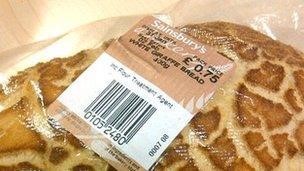
Sainsbury’s responded that her suggestion was a “brilliant idea.” The company sent her a kid-appropriate letter explaining where the name “tiger bread” came from, along with a £3 gift card. Lily’s mother’s blog about the response made the rounds on social media, gaining some great publicity for the company. Not only that, but a little while later, Sainsbury put out this statement:
“In response to overwhelming customer feedback that our tiger bread has more resemblance to a giraffe, from today we will be changing our tiger bread to giraffe bread and seeing how that goes.”
In Their Time of Need
Another perfect marketing opportunity is when your customers (or prospects) are under intense pressure. Maybe they have an impossibly tight deadline to meet, or maybe they are under legal pressure. Maybe they’ve been hit with a PR fiasco and are overwhelmed. At times like these, make sure to bend over backwards to make things happen in their “time of need.” Because they are under stress, if you can come through for them, you will gain their undying loyalty.
For example, during the beginning of the Covid pandemic, companies that felt their customers’ fears and found ways to help them were much more likely to emerge at the other end of the crisis with customers who felt indebted to them. These companies offered things like curbside pickup, touchless customer service, and services targeted to making lockdown easier.
And stress can be triggered by much more minor situations than a worldwide pandemic. For example, when this family accidentally left a treasured child’s toy at a Ritz Carlton hotel, the hotel’s Loss Prevention Team responded by sending them not just the recovered toy, but also pictures of the stuffed animal having an “extended vacation” at the resort: lying on a pool chair wearing sunglasses, at the spa getting a massage, and even driving a golf cart, among others.
So when you find either yourself or your clients having a “lemon” kind of day, take a step back and start brainstorming. Is there a way that you can turn this opportunity into a tall glass of ice-cold lemonade?


