

Using influencers like I’ve shown you in the previous two articles is fascinating 一 but marketing didn’t always work this way. Traditionally, brands had to advertise based on “rate sheets” that laid out media plans and prices.
These media kits include packages from cheap ads in small publications or on small shows to expensive advertising on national or prime-time media outlets. Rate sheets make everything organized, and they still exist. Look at these 2024 rate sheets from Robb Report and The Food Network.
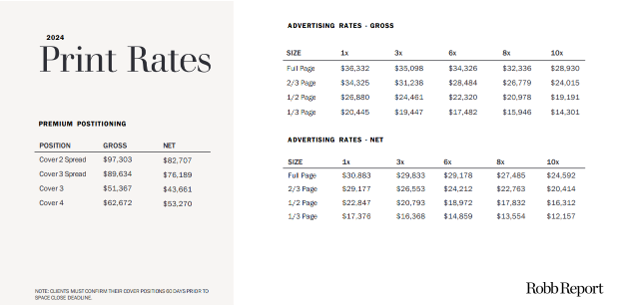
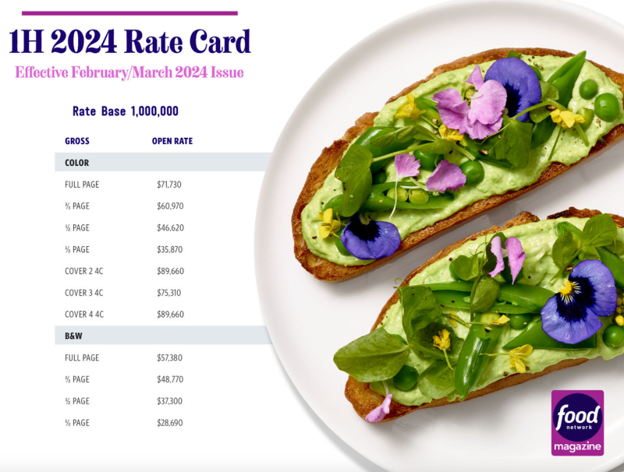
Some advertising options can be relatively cheap. Tony Robbins got his motivational coaching business started by investing in late-night infomercials. These types of commercials are only around $25 CPM (cost per 1,000 impressions) at the local level. Here’s an example:
Still, mass advertising is generally an expensive option. However, your influencer marketing doesn’t have to be that costly.
How much do you have to pay an influencer?
It won’t surprise you to learn that, like traditional media outlets, influencers have started using their own rate sheets. Although their rates vary wildly, you have more opportunities to make things work. That’s because, unlike traditional media, you usually deal with individuals, so there’s no limit to how exactly you can structure the deal.
And here’s where creativity and patience pay off. Rather than investing in seconds of advertising time on radio or TV, or pages of advertising in a newspaper or magazine, the only thing limiting the influencer is his or her creativity. They can charge for a variety of things, such as:
- Posts that mention #yourbrand
- Pictures or videos of them using and reacting to your product
- Giveaways or contests featuring your product
- Interviews, podcasts, or highlights of you, your company, or your customers
- Anything else that they — OR YOU — can think of
Let’s zoom in on that last one. It’s not just the influencer saying what they’ll do and for how much money. It’s not just the items on their rate sheet. It’s also any ideas that come from your creativity.
If you have a brand, product, service, or organization and can think of a good reason why the influencer would like to promote it (for free or for pay), you can “pitch” the influencer.
Pitching an Influencer
Pricing comes down to pitching. Once you’ve identified the right influencer, you’ll need to present your idea 一 and how much you’re willing to pay. So, how do you pitch an influencer?
First, you have to find the influencer you want to represent your brand. You can either work with a marketing agency, or use your own research. You can use tools like Influencity to find people who influence your target customer.
Before you pitch those influencers, do a little bit of digging. How engaged is their fan base? What are others saying online about them? Have they worked with other brands, and if so, how did they represent them? Are there any conflicts of interest?
With your list narrowed, it’s time to make the connection. Influencer marketing is traditionally untraditional, so your outreach should feel the same. Sending a brief, direct message will suffice. In your short pitch, you should include:
- What is your brand about, and why is it relevant to them?
- What type of campaign do you have in mind?
- What are the overlapping similarities between their audience and what you offer?
Here’s an example of what that pitch could look like:
Hi [INFLUENCER NAME],
I’m [YOUR NAME] from [BRAND NAME] contacting you about a potential collaboration.
We offer [PRODUCT NAME] to [SOMETHING ABOUT THEIR FAN BASE] so that [MENTION SOME BENEFIT OF YOUR IDEA].
I’ve followed you for some time and think [YOUR PRODUCT OR BRAND] could help your other followers [ADD MORE BENEFITS].
We can offer you free products and compensation in exchange for paid partnership posts on Instagram and TikTok. Are you available next Monday to talk over this collaboration idea?
[YOUR NAME]
You can see that there’s much more room for innovation. The influencer generally has complete discretion in choosing what to promote, and if it sounds exciting – and relevant – then your idea can fly.
This is why influencer marketing can be so appealing to small and/or bootstrapped businesses. If you’re smart and ambitious and hopefully very, very creative and persuasive, you can get the right influencers to come aboard for a price you can afford, with a win/win proposition that will leave everyone happy.
What About Micro-Influencers?
Another way to get even more bang for your buck is to work with micro-influencers.
While nano-influencers have under 10,000 followers and macro-influencers have over 100,000 followers, micro-influencers fall in the middle with a small but healthy audience between 10,000 and 100,000 followers.
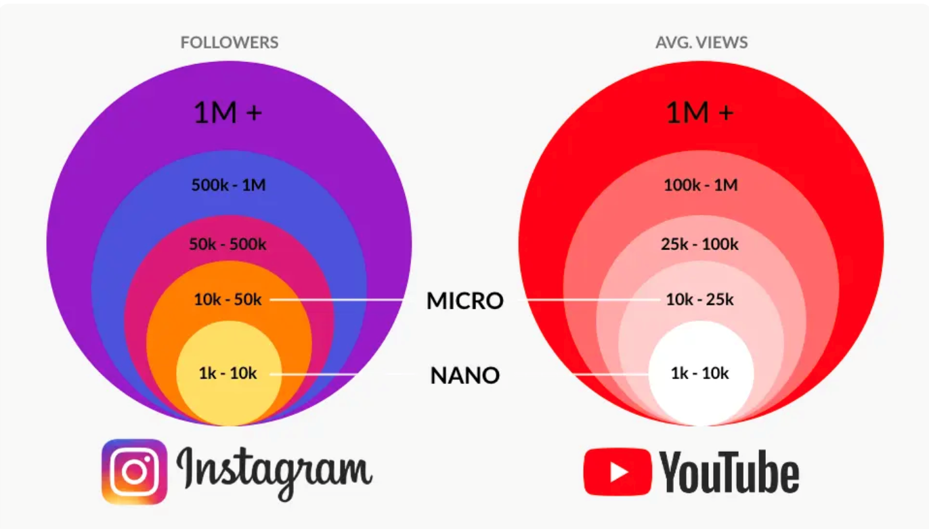
Photo Credit: Hollyfy
Why is this so important?
Because even if you can’t afford to hire a major influencer because they’re too expensive, you may find a lot of value in getting micro-influencers to work for or collaborate with you. This is much more affordable and might be effective if the micro-influencers are very closely targeting the right buyer base for your brand.
According to Shopify, micro-influencers typically charge $100 per 10,000 followers on Instagram for a reel, rarely going over $7,000. If the micro-influencer posts a story, they might charge even less, starting at $50 per 10,000 followers.
Those prices typically decrease on TikTok, where micro-influencers charge an average of $25 to $125 per post.
On YouTube, where there’s a more captive audience, micro-influencers charge an average of $2,000 to $5,000 for brand promotion.
(Be aware that these numbers can and will change. Do your own research to see what current rates look like.)
For brands who don’t want to overextend their budgets, looking for influencers who are early in the game is a PERFECT strategy. The flexibility and affordability of these influencers can dramatically impact your brand without draining your marketing budget.
I hope you’ve enjoyed this series on influencers. Through it, we’ve traced the origin and evolution of using influencers, the ethics and costs of working with influencers, and tips for choosing the right influencer. Now it’s time for you to put this approach to work for your business!


